Guide to Working Remote
Posted: May 12, 2026
Reflecting on five plus years working from home
It still feels like yesterday. The covid pandemic sent us working from home thinking we'd be back at our desks in a few weeks or months at the worst. But for many of us remote working became the new normal, indefinitely.
I find that as I slipped into a remote working routine life seems to move by more rapidly, whether or not I'm paying attention - and somehow it's already been six years into remote working, but I still feel new to this way of working. To be honest, although there are some incredible perks (like avoiding rush hour traffic) it was a little hard for me to adjust to being by myself so much of the time, even as a pretty significant introvert that I am.
So, here is a list of some of the tools I've developed to gradually adjust to this new work life balance. These are my tips for working remote:
1) Start the day right
I'm starting with the most important thing: Coffee. I was a consistent Starbucks consumer before the pandemic (and honestly I still am), frequently grabbing a cold brew to help me power through the remaining work of the day. That paused in year one of the pandemic, so I started experimenting with brewing my own cold brews overnight in a large French press, and then exploring other ways to make the perfect cup of coffee to start my day. I got a basic grinder to have fresher grounds, tried using a pour over method, and kept tinkering with the methods.
Ultimately I landed on a pour over method that I think is perfection (for me). I also use a nicer grinder, the Ode from Fellow (which I waited and got on a black Friday online deal), and a kettle from Breville that can heat water to various temperatures (ideal for coffee, or green black or herbal teas, etc). However, other than the choice of coffee beans themselves (my wife and I like Lavazza), the thing that makes the biggest difference is the pour over brewer itself. Indisputably the Hario v60 is the best option for a pour over brewer (and we've tried a few). It leads to significantly better flavor. And it's the cheapest part of the whole set up (you can get one on Amazon for around $30)! As a result of this experimentation I'm having better coffee and saving a lot of money in the long run.
2) Filling the aural void
One of the hardest adjustments to working from home was getting used to the silence. In the office I wore headphones sometimes to drown out the noise of the office commotion and help my focus, but switching to working at home there were now deafening gaps of silence. I found that the vacuum of human interaction can be somewhat augmented by listening to podcasts; not a replacement for human interaction, but can function more like a mental distraction from the isolation.
When I need to write an email or code something I generally listen to music instead of podcasts so my mind isn't distracted by spoken words. Interestingly for me some kinds of work, more visual things like designing, or things that are repetitive, they tend to be less bothered by conversation; it is when I'm writing my own thoughts I need the language part of my brain free from distraction, so music is the best option then.
When it comes to podcasts, the hardest thing is finding the right ones, there are so many choices. It just takes time to find them. And I've found the chemistry of the host(s) and guest(s) is just as important or maybe more important than the subject matter they are discussing. Here are some of my personal favorite podcasts: The Pen Addict (all about the hobby of stationary and it's trends), This Week in Tech (as a tech enthusiast I've been listening to TWiT since the early days), Ruminate (a podcast about many things, but most often about potato chips as it turns out), Shop Talk Show (about web design and development),
Another tip: invest in good wireless speakers. My wife got us some Sonos Era 100 speakers on sale at Costco for Christmas and OH MY GOSH do they make listening to music incredible. Listening to old favorites that sound brand new to my ears has been a most worthy upgrade to our home/workspace.
3) Finding a Rhythm
This has been the hardest thing. When I worked in an office there was a natural cadence to life. Real life meetings helped to break up the day. And although I never felt like I had too few meetings, looking back I do appreciate how they connected me with others I wouldn't otherwise have connected with. There is something extremely valuable in those chance conversations that Microsoft Teams can not remotely replace. That connectedness has been a challenge to replicate in the post-office remote workspace. For a while my work life rhythm post working in the office felt all out of whack.
An important discovery for me in those first couple years was the Pomodoro Timer concept. Especially with larger projects and tasks that seem never-ending, this method ensures that I take time away from the screen to recharge my eyes and get some steps away from the keyboard. You can read about the technique on Wikipedia. I have a 25 minute timer on my iPhone and computer that I've named "Pomodoro" and it's been a real helpful tool to grind out work.
Another technique I've tried to help organize my time is bullet journaling as a way to structure my day. This has been something I've been somewhat inconsistent in doing but in crunch times it comes in handy.
4) Finding the OffON switch
Knowing when to unplug: I struggled with this before the pandemic and I struggle with this now. But when my work world was injected into my home space, that became a lot harder. For me a challenge of working from home, particularly in that first chaotic year of the pandemic, was finding a healthy work life balance. With so much happening, especially in that first year, the boundaries between non-work life and work-life felt harder to separate. Blocking my time has helped a lot with this, using methods such as the Pomodoro technique mentioned above, have helped a lot with finding the off switch.
But sometimes the best off-switch for work, is finding the right ON-switch for something else. Maybe it's learning a new skill (or hobby or language), or a fun activity like going for a walk. Maybe it's being creative in a different way. It just needs to be something that motivates you to switch gears away from work.
5) Setting up your workspace
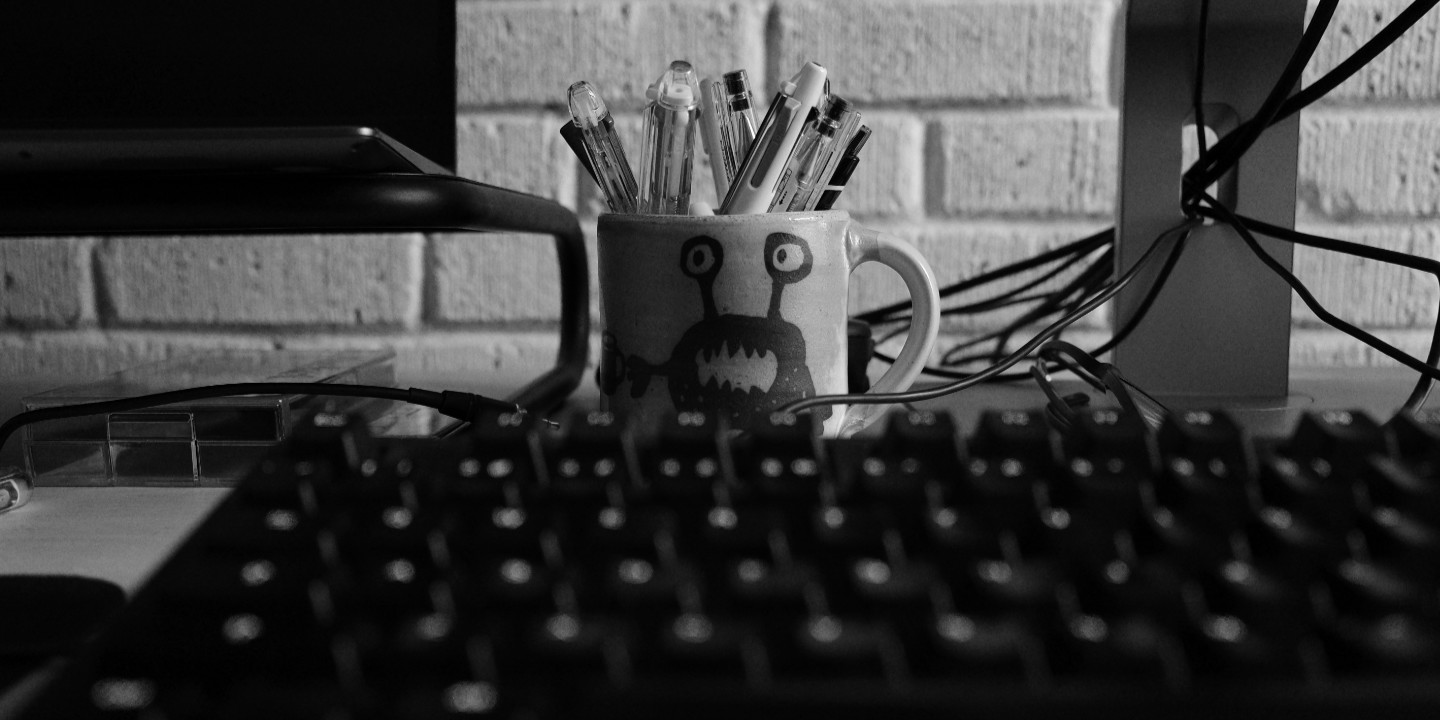
If you are blessed with enough space to have a dedicated space for work separate for the space where you do other work/creative endeavors, etc. that is great. As for myself I have one side porch converted to an office to rule them all. When I'm always in the same space it can feel hard to find that off switch mentioned above. That's one reason (among many) that I keep work and my personal life separate on the devices I use.
I have made it a point never to mix personal computing with professional computing. I don't do work activities on my personal machine, and vice versa. This at least helps keep separation between my work and the rest of my life.